Skip to content
bolt ENTERPRISE POWER CONTINUITY

Telecom & Data Center Power Solutions

High-density UPS and advanced LiFePO4 battery systems engineered for critical infrastructure. Ensure continuous operation with intelligent, scalable power continuity solutions.
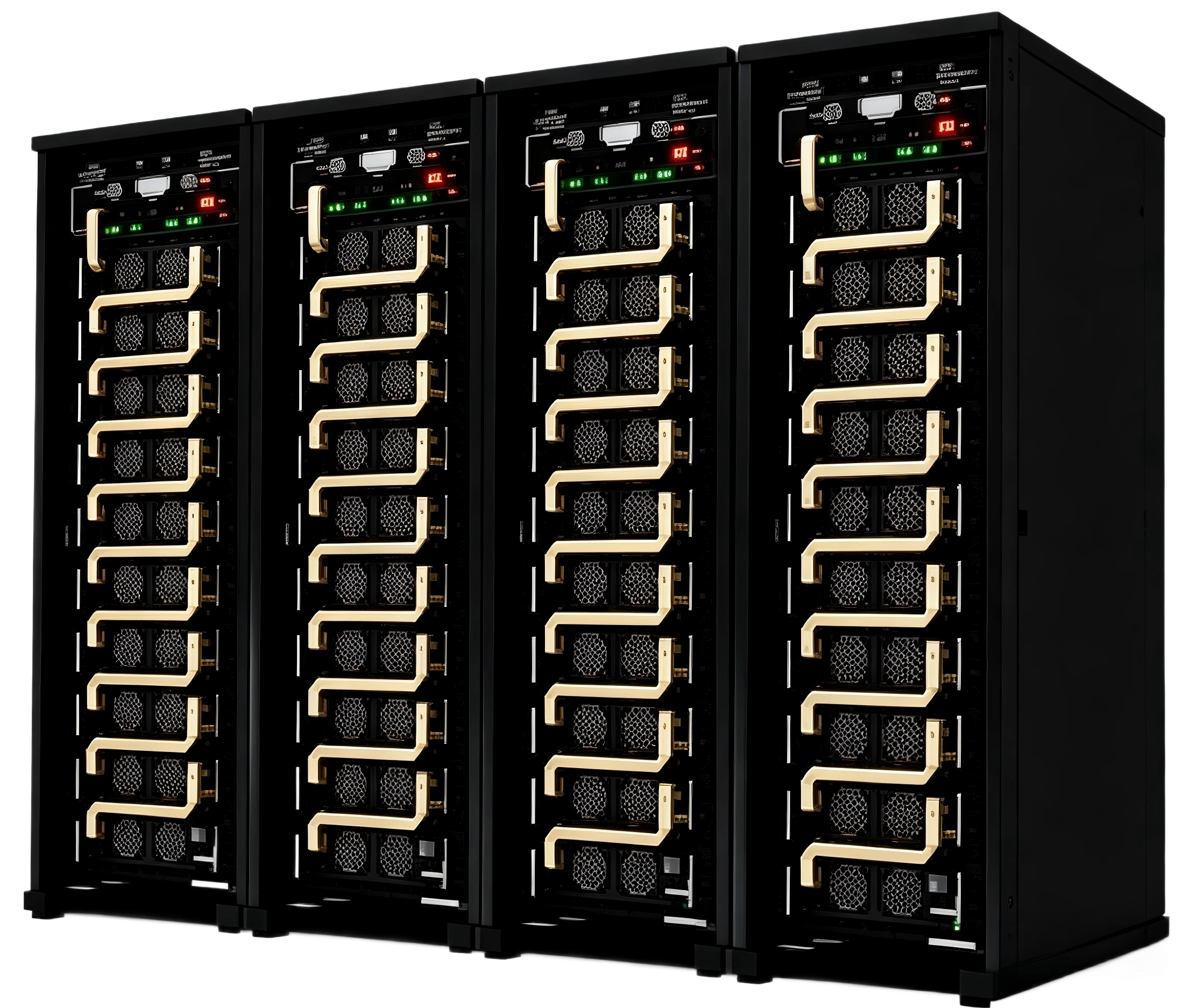
Rack Mount Battery System
sensors LIVE MONITORING

Critical Infrastructure Challenges

electrical_services

Grid Instability

Fluctuating utility power demands robust buffering. Our systems provide seamless transfer and extended runtime during prolonged outages.

thermostat

High Energy Consumption

Cooling legacy VRLA systems drains efficiency. LiFePO4 chemistry allows for higher operating temperatures, drastically reducing HVAC loads.

memory

AI-Driven Power Demands

High-density compute requires high-density power. Our modular UPS designs scale rapidly to meet the extreme kW/rack demands of AI infrastructure.

Frequently Asked Questions About Telecom & Data Center Power


What are the most reliable power backup solutions for modern data centers?

The most reliable data center power backup solutions combine UPS battery systems with backup power generators.
Modern data centers typically deploy LiFePO4 battery banks for instant switchover (millisecond-level) during outages, paired with diesel or natural gas generators for extended backup duration. VRLA batteries remain a cost-effective option for traditional infrastructure, while advanced lithium-ion ESS offer higher energy density, longer cycle life (6,000+ cycles), and intelligent BMS monitoring—critical for handling the power requirements for AI data centers.
Negative Assertion: A single backup solution cannot guarantee 99.999% uptime; tiered redundancy (N+1 or 2N) is required.


Which battery chemistry is better for telecom base station backup: VRLA or LiFePO4?

For telecom battery backup, the choice depends on operating environment and lifecycle cost.
VRLA batteries are proven, cost-effective, and suitable for temperature-controlled environments with 3-5 year lifespans. LiFePO4 batteries excel in outdoor telecom cabinets due to superior high-temperature tolerance, 10-year lifespan (6,000+ cycles), and integrated smart BMS for remote monitoring—reducing site visits by up to 60%.
Negative Assertion: LiFePO4 systems have higher upfront costs; ROI is achieved over 7-10 years through reduced maintenance and replacements.


How do data centers handle the surging energy demands of AI workloads?

AI datacenter energy demands require next-generation power systems for data centers designed for high-density computing.
Solutions include: (1) High-capacity UPS battery systems with faster response times, (2) Modular ESS architecture allowing rapid capacity additions, (3) Liquid-cooled battery systems for thermal management of high-power racks, and (4) Renewable energy integration to offset carbon footprint.
Negative Assertion: Traditional air-cooled power infrastructure cannot efficiently support AI server densities exceeding 50kW per rack.


What features should I look for in data center power management solutions?

Effective data center power management solutions must include: Real-time BMS monitoring (voltage, temperature, SOC via RS485/CAN/Modbus), predictive failure analytics, automated load balancing, and remote firmware updates.
Advanced systems integrate with DCIM platforms to optimize data center power usage (PUE reduction) and enable proactive maintenance.
Negative Assertion: Power management software cannot compensate for undersized battery capacity or poor power distribution design.


Can renewable energy sources power data centers and telecom infrastructure?

Yes, renewable energy sources for data centers are increasingly viable through hybrid power systems integrating solar PV, wind, and Battery Energy Storage Systems (BESS).
Telecom base stations can achieve 70-90% renewable penetration with solar-powered battery backup, while hyperscale data centers deploy on-site solar farms with grid-forming ESS for peak shaving and sustainability goals.
Negative Assertion: Renewable-only systems require oversized battery storage and cannot guarantee 24/7 availability without grid or generator backup.


How do I calculate the right backup power capacity for my data center?

To size data center backup power systems: (1) Calculate total critical load (kW), (2) Determine required autonomy time (typically 15-30 minutes for generator start, or hours for extended outages), (3) Apply depth of discharge (DOD) factor (80% for LiFePO4, 50% for VRLA), (4) Add N+1 redundancy.
Consult our power supply and distribution solution team for detailed load profiling.
Negative Assertion: Oversizing backup systems by more than 40% significantly increases capital costs and reduces efficiency.


What are the advantages of DC power supply systems in telecom and data centers?

DC power supply systems offer higher efficiency (3-8% less conversion loss than AC), simpler architecture for telecom equipment (native -48V DC), and direct battery integration without inverter losses.
Modern data center power systems increasingly adopt 380V-400V DC distribution for improved energy efficiency and reduced cooling requirements.
Negative Assertion: DC systems require specialized DC-compatible IT equipment or additional conversion stages for standard AC servers.


What is the best power distribution architecture for critical infrastructure?

Optimal electric power distribution systems for data centers follow Tier III/IV standards: dual utility feeds, automatic transfer switches (ATS), redundant UPS modules, and rack-level power distribution units (PDUs) with remote monitoring.
For telecom power systems, centralized DC power plants with distributed rectifiers and battery strings provide maximum reliability.
Negative Assertion: Power distribution redundancy cannot eliminate single points of failure in cooling or network infrastructure.


How should data centers prepare for grid power shortages and instability?

With rising data center power shortage news, facilities must implement: (1) On-site power generation capabilities (generators or fuel cells), (2) Grid-interactive ESS for demand response programs, (3) Flexible load migration between data center sites, (4) Capacity reservation agreements with utilities.
Real-time energy news monitoring helps anticipate grid constraints.
Negative Assertion: Data centers in constrained grids cannot rely solely on spot market power purchases during shortage events.


How can data centers improve energy efficiency and reduce environmental impact?

To improve data center energy efficiency: Deploy high-efficiency LiFePO4 UPS systems (98%+ round-trip efficiency), implement hot/cold aisle containment, adopt liquid cooling for high-density racks, utilize free cooling in suitable climates, and integrate renewable energy.
Advanced energy storage systems enable peak shaving and time-of-use optimization, reducing both costs and carbon emissions.
Negative Assertion: Energy efficiency improvements cannot compensate for exponential growth in AI compute demand; absolute energy consumption continues rising despite efficiency gains.